Keywords in Resume: Why You’re Not Getting Interviews (And How to Fix It)
Keywords in resume are the difference between getting ignored and getting interviews, and yet most people use them wrong.
If you’ve applied to 20, 30, even 50 jobs and heard nothing back…
It’s not because you’re not qualified.
It’s because your experience isn’t clearly aligned with what the job is asking.
The Hidden Mistake Most People Make With Keywords
Most people know keywords matter.
So they:
- skim the job description
- pull out a few words
- add them into their resume
On paper, it looks right.
But it doesn’t work.
Because they’re using keywords like labels…
instead of proof.
What Using Keywords Correctly Actually Looks Like
Let’s say the job description mentions: “campaigns”
Most people write: “Designed marketing materials for campaigns.”
That includes the keyword. But it doesn’t say anything.
Now compare that to:
“Designed visual assets for 10+ digital marketing campaigns, increasing engagement by 25%.”
Same keyword.
But now it shows:
- scope
- impact
- relevance
That’s the hidden edge.
Step 1: Find the Right Keywords (Don’t Guess)
Job descriptions are not random. They repeat what matters. If you see the same word or idea multiple times… that's a clue.
Instead of guessing, use AI to identify patterns and pick up more clues more quickly.
Step 2: Turn Keywords Into Proof (This Is Where You Win)
Adding keywords isn’t enough. You have to prove them.
Every bullet on your resume should answer: “What did I actually do with this?”
If it doesn’t…it’s not helping you.
Step 3: Reinforce Keywords in Your Cover Letter
Most people skip the cover letter or write something generic, especially when applying with 'easy apply' or when it's not requested. That's a missed opportunity.
The Real Problem Isn’t Effort, It’s Alignment
Most people are actually working really hard to find their next job. But without alignment, it turns into overthinking and repeating the same mistakes. But when you fix the alignment, everything changes.
If You Want to Use Keywords Immediately
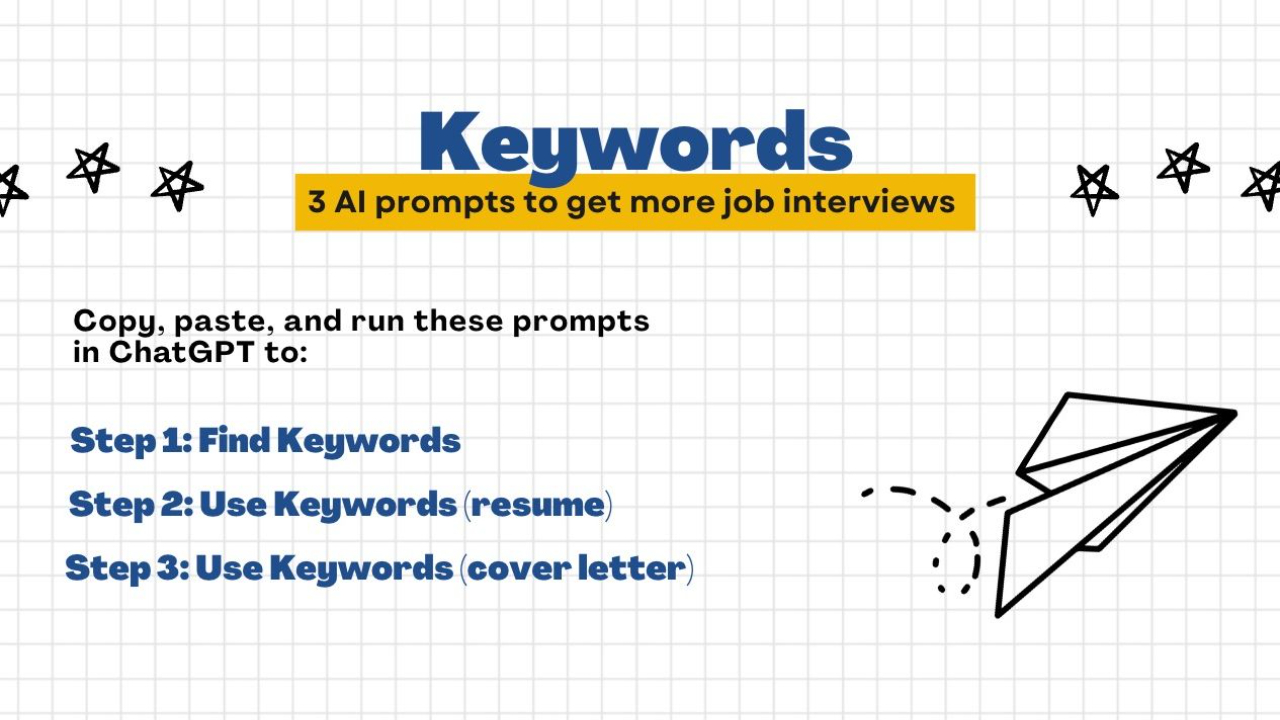
Copy, paste these prompts to use for each job with AI in seconds:
STEP 1: FIND KEYWORDS
Paste this into ChatGPT:
“I am applying for jobs but not getting interviews.
Here is a job description:
[PASTE JOB DESCRIPTION]
Identify the top skills and keywords that appear most frequently or seem most important.
Group similar skills and explain what the employer is prioritizing.”
STEP 2: USE KEYWORDS (RESUME)
Paste this into ChatGPT:
“I am applying for a [JOB TITLE].
Here is my current resume bullet:
[PASTE YOUR BULLET]
Rewrite this bullet to be more specific and aligned with the job description:
[PASTE JOB DESCRIPTION]
Use stronger language and include measurable impact if possible.”
STEP 3: USE KEYWORDS (COVER LETTER)
Paste this into ChatGPT:
“I’m applying for a [JOB TITLE].
Ask me a couple of questions to understand my experience with [KEYWORD].
Then use my answers and this job description:
[PASTE JOB DESCRIPTION]
to write a short, tailored cover letter.”
Want to Do this but Faster?
Build your AI Career Coach in minutes.
Load my full prompt library into ChatGPT so you don’t start from scratch every time, then customize it!
No guesswork.
Just clarity.
$27 — less than takeout...
Frequently Asked Questions About Keywords in Resumes
What are keywords in a resume?
Keywords in a resume are the specific skills, tools, and qualifications that appear in a job description. These are the terms hiring managers and applicant tracking systems (ATS) look for when evaluating candidates.
Why are keywords important for getting job interviews?
Keywords help your resume match what the employer is looking for. If your resume doesn’t reflect the right keywords, it may never be seen — even if you’re qualified.
How do I find the right keywords for my resume?
The best way to find keywords is to look for patterns across job descriptions. Repeated skills, tools, and responsibilities are strong indicators of what matters most. You can also use AI tools like ChatGPT to identify these patterns quickly.
How many keywords should I include in my resume?
Focus on the most important 5–7 keywords that consistently appear in job descriptions. Quality matters more than quantity — and each keyword should be supported by real experience.
Can I just add keywords to my resume to pass ATS?
No. Simply adding keywords without context won’t help. You need to show how you’ve used those skills through specific, results-driven bullet points. Also, ATS means Applicant Tracking System.
Should I use keywords in my cover letter too?
Yes. Using keywords in your cover letter reinforces alignment and gives you the opportunity to show real examples of your experience in context.
This blog was about keywords in resume providing a hidden edge.